➡️ INTRODUCTION
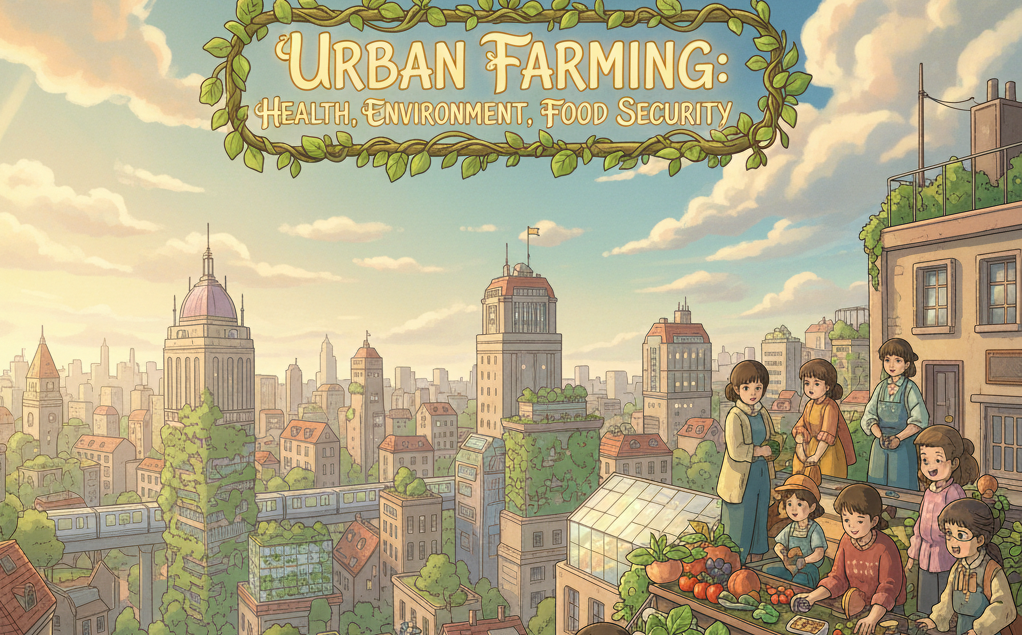
→ Urban farming refers to the practice of growing food within cities and towns using spaces such as rooftops, balconies, backyards, vacant plots, and community gardens. As cities grow rapidly and food systems become more complex, urban farming is gaining importance worldwide. It helps people access fresh, nutritious food while reducing dependence on long supply chains. Urban farming also improves environmental quality and supports healthier lifestyles. For individuals and families, it offers a practical way to grow safe vegetables, reduce grocery costs, and reconnect with nature. For cities, it strengthens food security, creates green spaces, and promotes sustainable living in a simple and effective manner.
➡️ Key Points / Benefits
→ Improves access to fresh and nutritious food
→ Supports physical and mental health through active living
→ Reduces environmental pollution and food transport emissions
→ Enhances urban food security and resilience
→ Encourages community participation and awareness
→ Makes productive use of unused urban spaces
🔵 1️⃣ → Urban Farming and Improved Human Health
Urban farming plays a direct role in improving both physical and mental health. Growing food encourages people to stay active and spend time outdoors, even in small urban settings. Handling soil, plants, and sunlight helps reduce stress and promotes well-being.
Key health benefits include:
- Access to fresh vegetables with higher nutritional value
- Reduced exposure to harmful chemicals by using organic methods
- Regular physical activity through gardening tasks
- Improved mental health due to reduced stress and anxiety
Urban farmers can start small by growing leafy greens or herbs. Simple steps such as using clean soil, safe water, and proper hygiene ensure healthy produce. Avoid overuse of fertilizers and focus on compost-based nutrition for safer food.
🔵 2️⃣ → Environmental Benefits of Urban Farming
Urban farming contributes positively to the environment by reducing pollution and improving urban ecosystems. Food grown close to consumers requires less transportation, which lowers fuel use and greenhouse gas emissions.
Environmental advantages include:
- Reduction in carbon footprint from food transport
- Improved air quality through green plant cover
- Better rainwater absorption, reducing urban flooding
- Recycling organic waste into compost
Cities with rooftop gardens and vertical farms experience cooler temperatures due to reduced heat absorption. To maximize environmental benefits, farmers should use water-efficient irrigation, avoid plastic waste, and choose native or climate-adapted crops.
🔵 3️⃣ → Strengthening Food Security in Urban Areas
Food security means reliable access to sufficient, safe, and nutritious food. Urban farming supports this by allowing cities to produce part of their own food locally. This becomes especially important during supply disruptions or emergencies.
Key contributions to food security include:
- Continuous availability of fresh produce
- Reduced dependence on distant food sources
- Better control over food quality and safety
- Support for vulnerable households with limited access
Urban residents should plan crops based on local demand and seasonal conditions. Mistakes to avoid include growing water-intensive crops in dry areas or ignoring soil contamination risks. Testing soil and using raised beds can help ensure safe food production.
🔵 4️⃣ → Economic and Community Advantages
Urban farming not only supports food production but also provides economic and social benefits. It can reduce household food expenses and create small income opportunities through surplus sales.
Community-level benefits include:
- Creation of local jobs and micro-enterprises
- Skill development in sustainable food practices
- Stronger community ties through shared gardens
- Increased awareness of healthy eating habits
Successful community farms often rely on shared planning, fair distribution of tasks, and clear rules. Examples include apartment rooftop gardens or neighborhood plots managed by local residents. Clear communication and regular maintenance help these initiatives succeed.
🔵 5️⃣ → How to Start and Sustain Urban Farming Successfully
Starting urban farming does not require large land or high investment. With proper planning, even small spaces can produce useful yields.
Step-by-step guidance:
- Identify available space (balcony, rooftop, window area)
- Choose suitable containers or raised beds
- Select easy-to-grow crops like spinach, tomatoes, or herbs
- Use quality soil and organic compost
- Monitor water use and sunlight exposure
Dos include regular plant inspection and safe pest control methods. Don’ts include overwatering, overcrowding plants, or ignoring local regulations. Monitoring plant health and adapting practices seasonally ensures long-term success.
➡️ CONCLUSION
→ Urban farming offers wide-ranging benefits for health, the environment, and food security. By producing fresh food locally, it supports healthier diets, reduces environmental impact, and strengthens urban resilience. It also encourages active lifestyles, community cooperation, and responsible resource use. With simple planning, appropriate crop selection, and sustainable practices, urban farming can be adopted by individuals and communities worldwide. Whether for personal consumption or community support, urban farming is a practical and effective solution for modern cities seeking healthier and more sustainable food systems.