➡️ INTRODUCTION
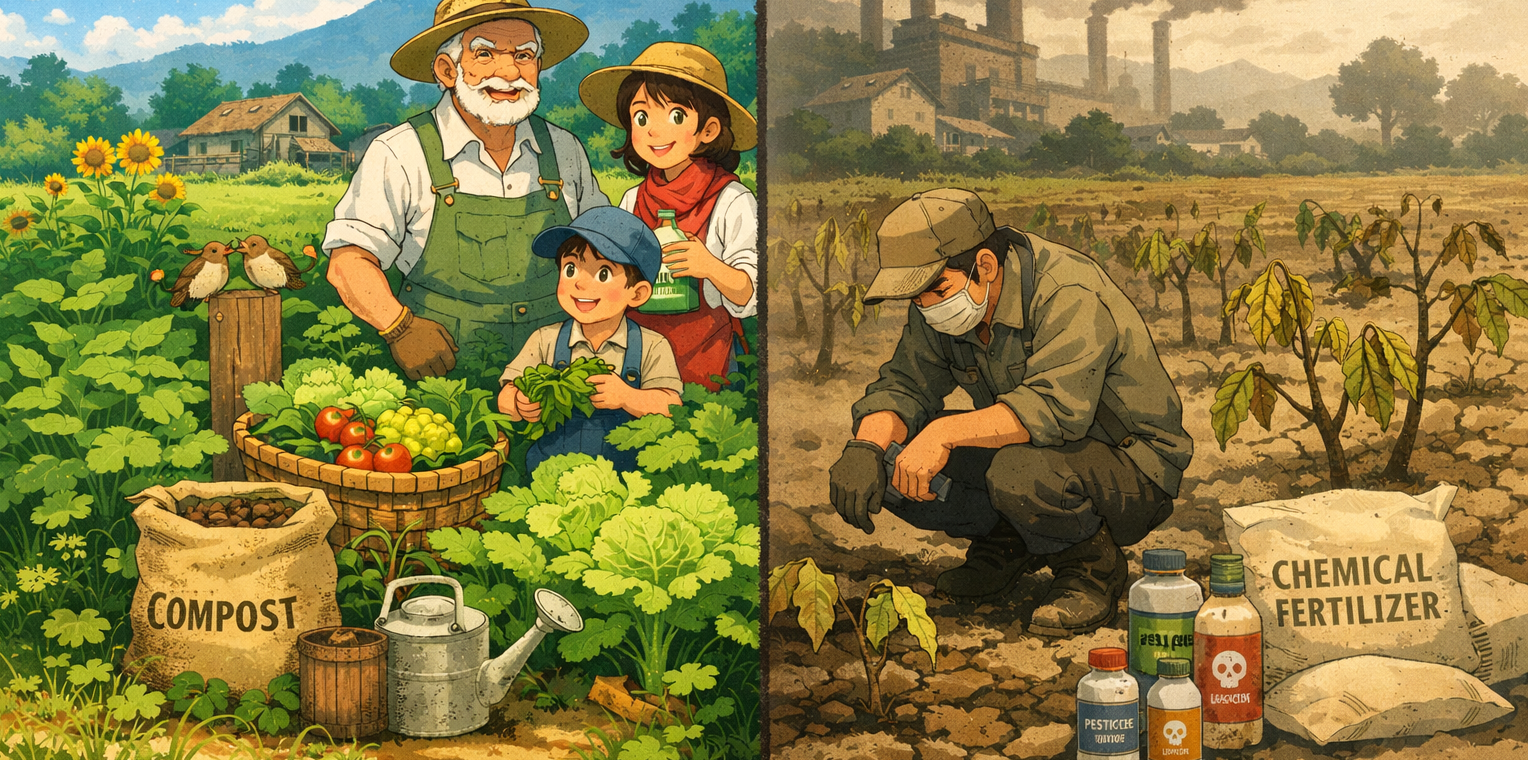
→ Choosing the right type of fertilizer is one of the most important decisions farmers make for crop productivity and soil health. Bio-fertilizers and chemical fertilizers work in very different ways, and understanding these differences helps farmers achieve better long-term results. While chemical fertilizers provide quick nutrients, bio-fertilizers support natural soil processes and sustainability. Knowing when and how to use each option can improve yields, reduce costs, and protect soil quality. This comparison helps farmers, gardeners, and agricultural planners make informed choices based on crop needs, soil condition, and environmental impact, leading to healthier farms and more reliable production over time.
➡️ Key Points / Benefits
→ Helps farmers choose the right fertilizer based on soil and crop needs
→ Supports long-term soil fertility and sustainability
→ Reduces unnecessary input costs and nutrient losses
→ Improves environmental safety and soil biodiversity
→ Encourages balanced and responsible fertilizer use
🔵 1️⃣ → Understanding Bio-Fertilizers
Bio-fertilizers are natural products that contain beneficial microorganisms such as bacteria and fungi. These microorganisms improve soil fertility by enhancing natural biological processes rather than directly supplying nutrients. They help convert unavailable nutrients in the soil into forms plants can absorb.
Common examples include:
- Nitrogen-fixing bacteria that supply nitrogen to plants
- Phosphate-solubilizing microbes that unlock phosphorus
- Mycorrhizal fungi that improve root absorption
Bio-fertilizers work gradually and depend on soil conditions, moisture, and organic matter. They are best used as part of a long-term soil management strategy. Proper storage, correct timing, and suitable soil conditions are important for achieving effective results.
🔵 2️⃣ → Understanding Chemical Fertilizers
Chemical fertilizers are manufactured products that supply nutrients directly to plants in concentrated forms. They usually contain nitrogen, phosphorus, and potassium, which are immediately available to crops. This makes them effective for rapid growth and quick nutrient correction.
Key features include:
- Fast nutrient release
- Predictable nutrient content
- Easy application
However, excessive or repeated use can reduce soil microbial activity and lead to nutrient imbalances. Chemical fertilizers are most effective when used carefully, based on soil testing and crop requirements. When applied correctly, they can support high yields, but overuse may damage soil structure and increase environmental risks.
🔵 3️⃣ → Key Differences in Soil Impact
The main difference between bio-fertilizers and chemical fertilizers lies in how they affect soil health. Bio-fertilizers improve soil biology, while chemical fertilizers mainly focus on immediate nutrient supply.
Bio-fertilizers:
- Increase microbial diversity
- Improve soil structure
- Enhance long-term fertility
Chemical fertilizers:
- Provide quick nutrient availability
- May reduce beneficial soil organisms over time
- Can lead to soil compaction and nutrient loss if misused
Farmers should avoid relying solely on chemical fertilizers. Combining biological inputs with responsible chemical use helps maintain soil balance and productivity.
🔵 4️⃣ → Cost, Efficiency, and Environmental Considerations
From a cost perspective, chemical fertilizers often show quick results but require repeated application. Bio-fertilizers may take time to show visible benefits but improve soil efficiency over the long term.
Important considerations:
- Bio-fertilizers reduce long-term input costs
- Chemical fertilizers may increase short-term yield
- Bio-fertilizers lower the risk of water and soil pollution
- Chemical fertilizers can cause nutrient runoff if overapplied
Using fertilizers efficiently reduces waste and protects surrounding ecosystems. Sustainable fertilizer management benefits both farm income and environmental health.
🔵 5️⃣ → Choosing the Right Fertilizer Strategy
The best approach is not choosing one over the other, but using them wisely together. Farmers should base decisions on soil tests, crop type, and farming goals.
Step-by-step guidance:
- Test soil to understand nutrient levels
- Use bio-fertilizers to improve soil biology
- Apply chemical fertilizers only when required
- Avoid over-application of any fertilizer
- Monitor crop response and soil condition
Dos and don’ts:
- Do follow recommended application rates
- Do combine fertilizers with organic matter
- Do not apply fertilizers without soil analysis
- Do not ignore long-term soil health
Balanced use improves efficiency and sustainability.
➡️ CONCLUSION
→ Bio-fertilizers and chemical fertilizers serve different purposes in agriculture, and understanding their differences helps farmers make smarter decisions. Bio-fertilizers support soil health, microbial activity, and long-term sustainability, while chemical fertilizers provide quick nutrient availability for immediate crop needs. Overreliance on chemicals can harm soil over time, while exclusive use of bio-fertilizers may not meet short-term demands. A balanced approach that combines both methods based on soil testing and crop requirements offers the best results. By using fertilizers responsibly, farmers can improve yields, protect soil resources, and build resilient farming systems for the future.