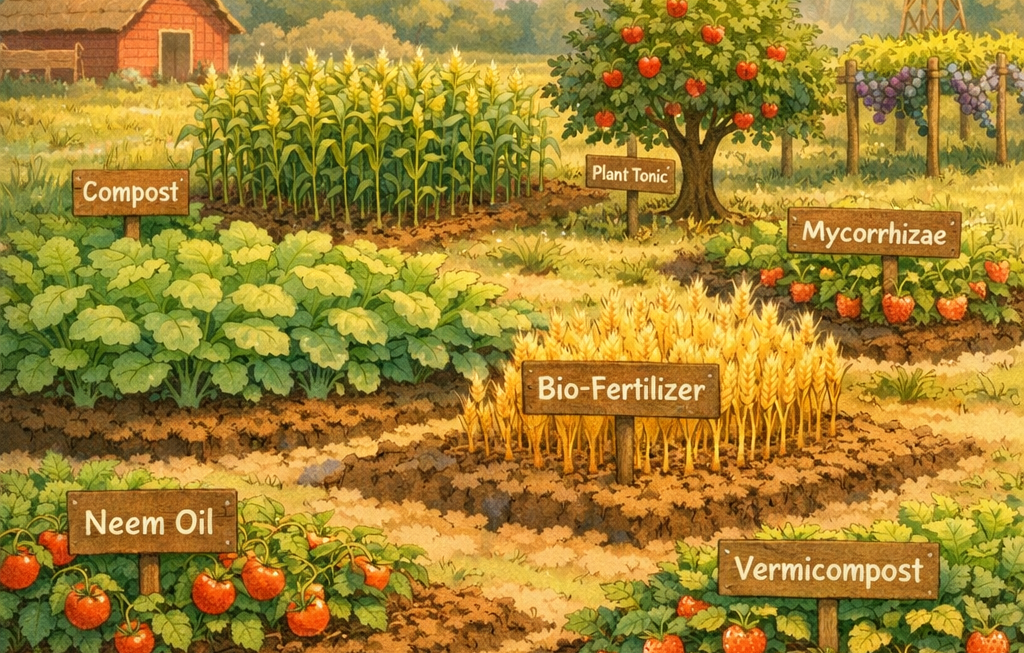
➡️ INTRODUCTION
→ Choosing the right bio-fertilizer for different crops is essential for improving soil fertility, crop health, and long-term farm sustainability. Bio-fertilizers contain beneficial microorganisms that help plants access nutrients naturally present in the soil. However, not all bio-fertilizers work the same way for every crop. Each crop has specific nutrient needs, root structures, and growth patterns that influence how it responds to bio-fertilizers. Understanding these differences helps farmers and gardeners apply the right product at the right time. This leads to better nutrient uptake, healthier plants, reduced input costs, and improved yields. Proper selection also protects soil health and supports environmentally responsible farming practices.
➡️ Key Points / Benefits
→ Improves nutrient availability specific to crop needs
→ Enhances root development and plant growth
→ Reduces dependence on chemical fertilizers
→ Supports long-term soil health and microbial balance
→ Increases fertilizer efficiency and cost-effectiveness
🔵 1️⃣ → Understanding Crop Nutrient Requirements
Different crops require different nutrients at various growth stages. Understanding these needs is the first step in choosing the right bio-fertilizer. For example, cereal crops require more nitrogen, while legumes benefit from nitrogen-fixing microorganisms.
Key considerations include:
- Crop type (cereals, vegetables, fruits, legumes)
- Growth stage (early growth, flowering, fruiting)
- Soil nutrient status
Before selecting a bio-fertilizer, farmers should conduct soil testing to identify nutrient deficiencies. Matching crop requirements with suitable bio-fertilizers ensures better results. Applying the wrong type may not harm crops but can reduce effectiveness and slow visible benefits.
🔵 2️⃣ → Types of Bio-Fertilizers and Their Crop Suitability
Bio-fertilizers are classified based on the nutrients they help supply. Choosing the correct type depends on the crop’s primary nutrient demand.
Common bio-fertilizers include:
- Nitrogen-fixing bio-fertilizers for cereals, oilseeds, and vegetables
- Phosphate-solubilizing bio-fertilizers for root crops and legumes
- Potassium-mobilizing bio-fertilizers for fruit and tuber crops
- Mycorrhizal bio-fertilizers for horticultural and plantation crops
Using crop-specific bio-fertilizers improves nutrient uptake efficiency. Combining multiple bio-fertilizers is possible but should be done carefully to avoid compatibility issues.
🔵 3️⃣ → Selecting Bio-Fertilizers for Major Crop Groups
Each crop group responds differently to bio-fertilizer application. Understanding these responses helps maximize benefits.
Examples by crop group:
- Cereal crops: Nitrogen-fixing and phosphate-solubilizing bio-fertilizers improve growth and grain development
- Legumes: Rhizobium-based bio-fertilizers enhance nitrogen fixation
- Vegetables: Balanced bio-fertilizers improve root strength and nutrient uptake
- Fruit crops: Mycorrhizal bio-fertilizers support long-term soil fertility
Mistakes to avoid include applying a single bio-fertilizer for all crops without considering specific needs. Tailoring selection improves crop performance and soil health.
🔵 4️⃣ → Application Methods and Timing
Even the right bio-fertilizer may fail if applied incorrectly. Proper method and timing ensure microorganisms survive and function effectively.
Common application methods:
- Seed treatment before planting
- Soil application mixed with compost or organic matter
- Root dipping for transplanted crops
Best practices:
- Apply bio-fertilizers during cooler hours
- Maintain adequate soil moisture
- Avoid mixing with chemical pesticides
Applying bio-fertilizers early in the crop cycle allows microorganisms to establish and support plant growth throughout the season.
🔵 5️⃣ → Monitoring Results and Improving Effectiveness
Monitoring crop response helps farmers adjust bio-fertilizer use for better outcomes. Results may not be immediate, but gradual improvement is expected.
Steps for monitoring:
- Observe plant growth and root development
- Check soil texture and moisture retention
- Compare yield and crop quality
Dos and don’ts:
- Do follow recommended application rates
- Do store bio-fertilizers in cool, shaded conditions
- Do not apply to extremely dry or waterlogged soil
- Do not expect instant results like chemical fertilizers
Continuous observation helps refine bio-fertilizer strategies and improve long-term soil productivity.
➡️ CONCLUSION
→ Choosing the right bio-fertilizer for different crops is a key step toward sustainable and productive farming. By understanding crop nutrient needs, selecting suitable bio-fertilizer types, and applying them correctly, farmers can improve soil health and crop performance naturally. Bio-fertilizers work best when matched carefully with crop requirements and used consistently over time. Proper monitoring and responsible application further enhance their effectiveness. Adopting crop-specific bio-fertilizer practices helps reduce chemical dependency, lower costs, and build resilient farming systems that support long-term agricultural success.